Solution Summary
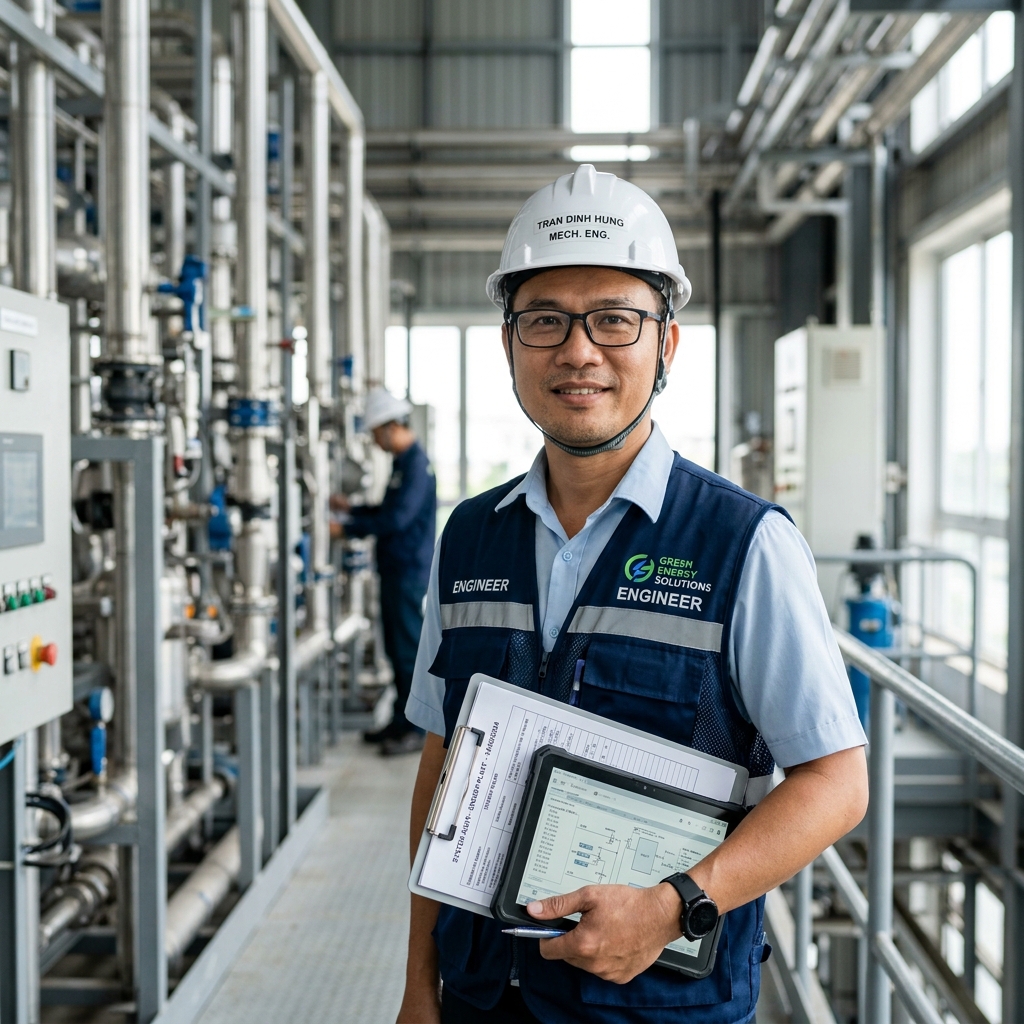
For cold storages with a capacity of 200 tons to 15,000 tons of goods, reducing power must absolutely not be at the expense of increasing storage room temperature because it will damage the goods. Engineer Tan Long applies modern thermodynamic principles with 4 technical levers:
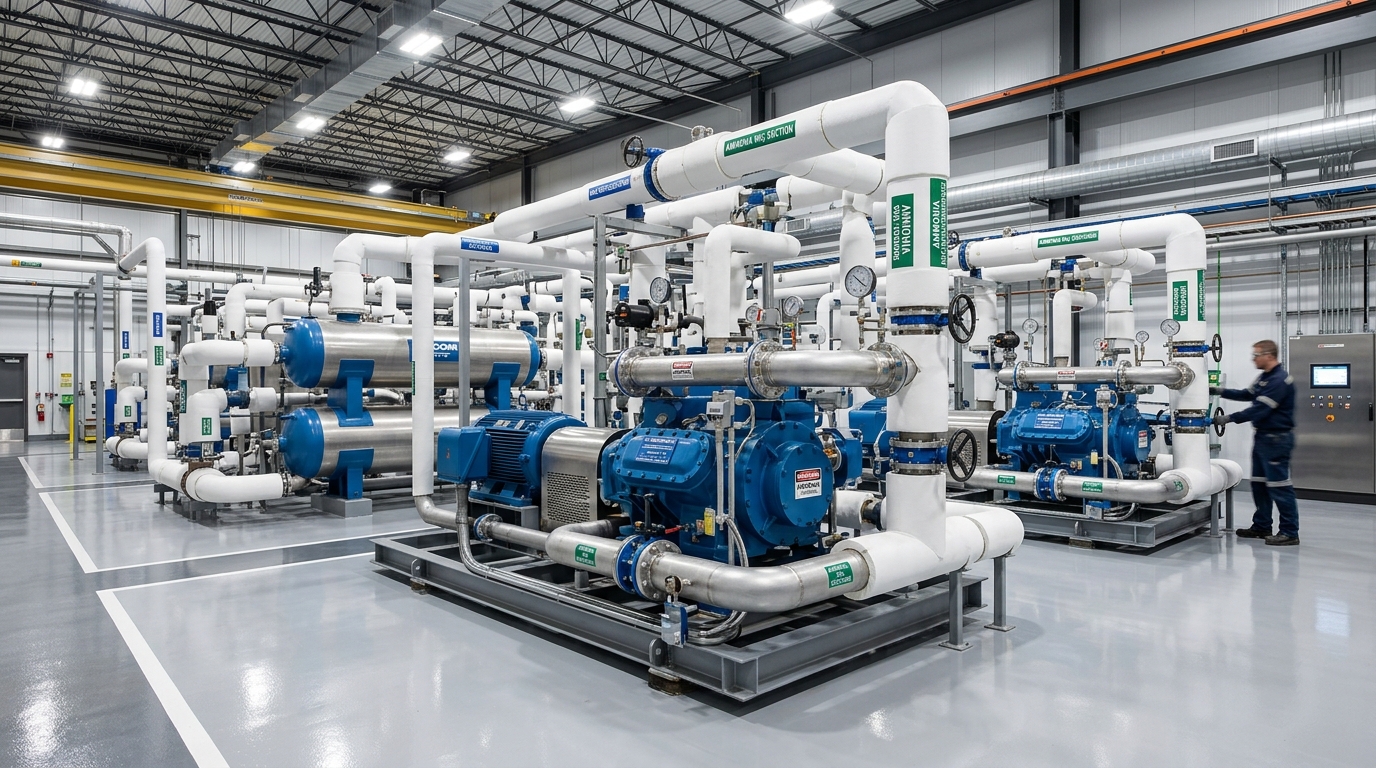
- VFD inverter: Stepless control of screw compressor according to actual suction pressure (18% - 25% reduction in power).
- Stainless steel 304 evaporative condenser: Lower the condensing temperature from 42°C to 34°C (increase the COP coefficient by 15% - 20%).
- Defrost with Hot Gas (Hot Gas Defrost): Cut off 80% of the electric resistance, defrost completely in 12 minutes.
- Anti-heat loss: Air curtains, 1.5m/s PVC quick-rolling doors and 42kg/m³ density PIR panels eliminate heat bridges.
1. Why Electricity Accounts for 65% - 75% of Cold Storage Operational Costs
In the cost structure of operating cold storage for food, seafood and cold logistics (Cold Chain), the cost of electricity for compressors and fans is always the biggest burden. Statistics from the Vietnam Association of Seafood Exporters and Producers (VASEP) show:
- A frozen storage warehouse of 1,000 tons of goods (-18°C to -22°C) costs on average from 80,000,000 VND to 130,000,000 VND in electricity/month depending on machine technology and the quality of insulation of the warehouse shell.
- An NH3 industrial refrigeration compressor station for a 5,000 ton seafood processing factory can consume over 400,000,000 VND in electricity per month.
- More than 70% of cold storages operating for more than 5 years in Vietnam are wasting from 15% to 30% of electricity due to compressors running under load without inverters, condensers with poor cooling condensation, and storage shells with thermal bridges causing condensation and continuous cold leaks.
2. Four Key Engineering Solutions Cutting 20% - 25% Power Bills
a. Installation of VFD Inverter Stepless Control for Screw Compressor
For traditional screw compressors from Mycom, Bitzer or Kobelco, when the cold room has reached the right temperature, the compressor will reduce the load by pulling the slider (Slide Valve) to the 75%, 50% or 25% position. However, in slider load reduction mode, mechanical efficiency drops sharply: The machine runs at 50% of cooling capacity but still consumes up to 72% of electricity capacity!
When engineer Tan Long integrated VFD (Variable Frequency Drive), the rotation speed of the screw was directly adjusted from 30Hz to 55Hz according to the suction pressure sensor signal:
- Power consumption is most directly proportional to the compressed fluid volume flow rate, completely eliminating the friction loss of the mechanical slider.
- Soft Start is smooth, the starting current is only 1.0 - 1.2 times the rated current (instead of jumping 5 - 7 times like star/delta starting), does not cause voltage drop in the factory power grid and prolongs compressor bearing life by 2 times.
b. Application of Evaporative Condensers Stainless Steel 304 Lowers Condensation Temperature
In the Carno refrigeration cycle, the lower the condensing temperature, the smaller the Compression Ratio, the lower the compression work of the motor.
| Condenser Type | Condensation Temperature (°C) | Average COP | Power Consumption / kW Refrigeration | Electricity Saving Level |
|---|---|---|---|---|
| Air Cooled condenser | 46°C - 50°C | 2.45 | 0.408 kW | Baseline standard (0%) |
| Tube Condenser + Cooling Tower | 38°C - 42°C | 3.10 | 0.322 kW | Save 12% - 15% |
| Tan Long 304 Stainless Steel Evaporative Condenser | 32°C - 34°C | 3.85 | 0.259 kW | Save 22% - 28% |
Stainless steel 304 evaporative condenser manufactured by Tan Long at Duc Hoa 1 Industrial Park factory uses SUS304 stainless steel tube beam to resist sea salt corrosion, aerodynamically shaped aluminum blade axial fan and thin film distribution sprinkler system, ensuring the condensing temperature is always stable around 33°C even on hot days of 39°C.
c. Smart Hot Gas Defrost Sequencing
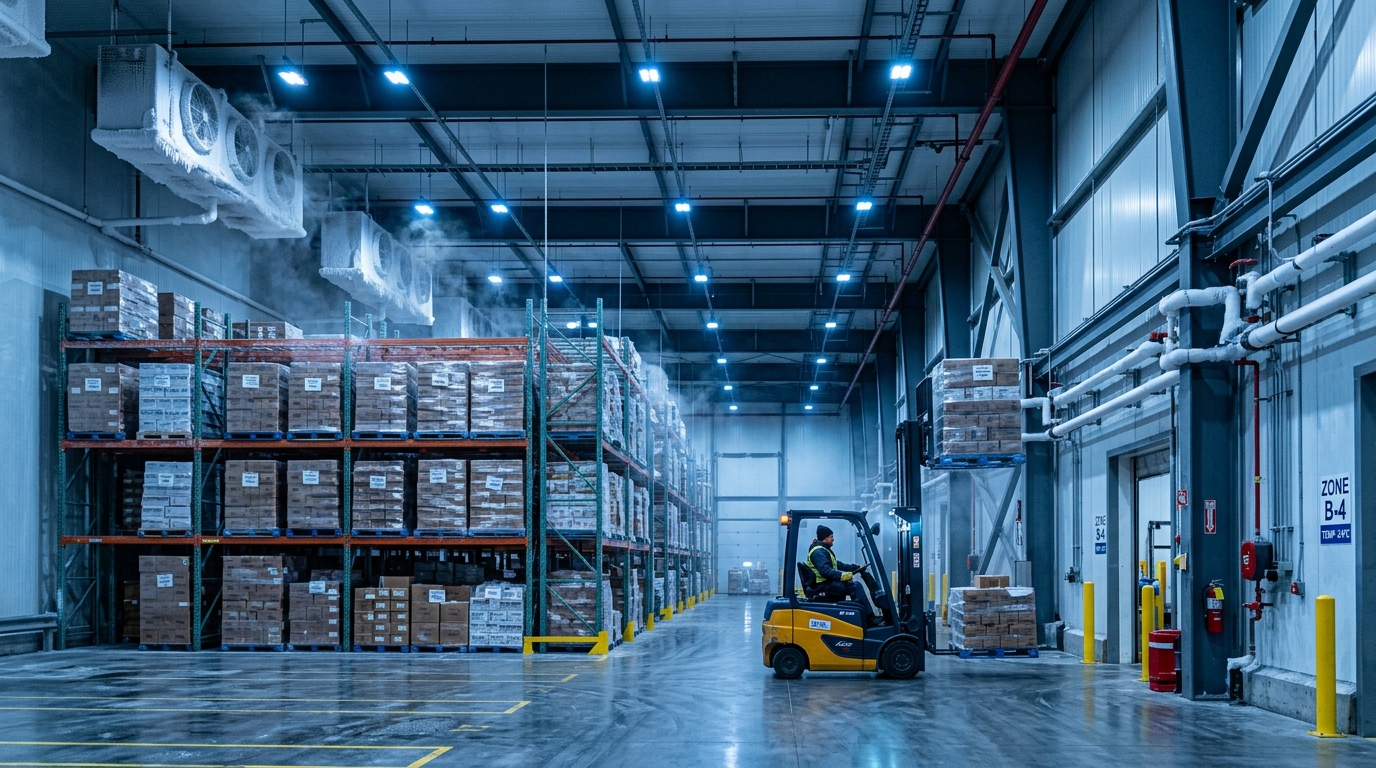
Snow and ice forming on the condenser acts as an extremely good insulating layer, reducing the heat transfer coefficient k, causing the compressor to run continuously but the room is still not cold enough. Most common cold storage installation units choose the defrost method using Electrical Defrost because it is easy to install. However:
- Each industrial refrigeration unit requires from 15kW to 35kW of resistive capacity. With a warehouse of 4 cooling units that defrost 3 times a day, heating costs millions of VND per day.
- The resistor's heat increases the warehouse air temperature from -20°C to -12°C, partially melting the surface of the goods and the compressor then has to exert a heavy load to pull the heat back down.
Tan Long applies the technology of Defrosting with Compressed Hot Gas extracted from the compressor push head. Hot gas at a temperature of 85°C goes directly into the evaporator tube, melting the ice and snow in just 10-12 minutes. This method does not consume any heating electricity and keeps the warehouse temperature stable below -18°C.
d. Eliminating Enclosure Infiltration and Dock Door Thermal Losses
No matter how modern the compressor is, if the storage shell leaks heat, electricity bills will continue to evaporate. Tan Long deploys synchronous solutions:
- PIR panel with positive and negative camlock molding: Uniform density of 42 - 45 kg/m³, super low thermal conductivity coefficient λ = 0.019 W/m.K (35% better insulation than regular EPS foam).
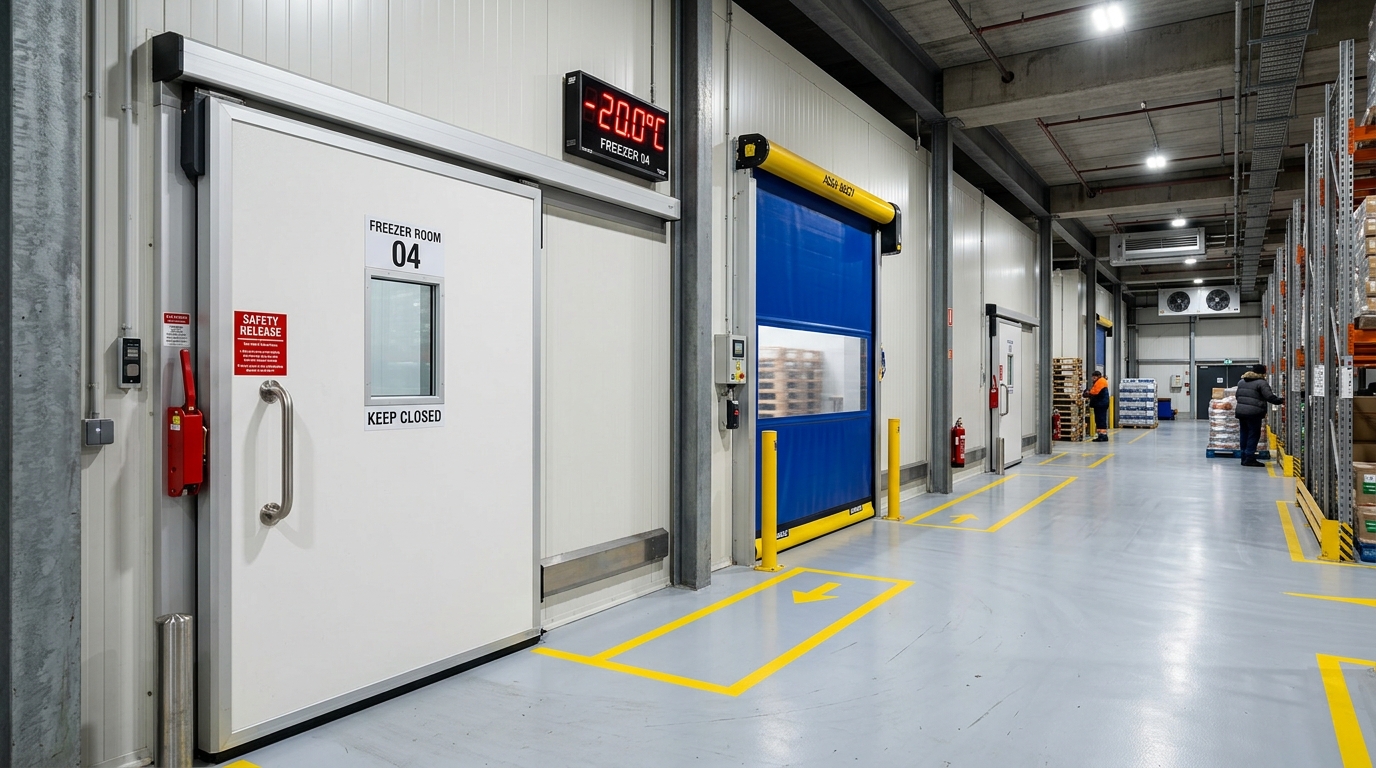
- T-Light cold storage door is airtight: Equipped with high elastic double EPDM rubber gaskets, with heating resistance wire to prevent freezing of door edges.
- High-Speed Double PVC rolling door system: Extremely fast opening and closing speed of 1.5 meters/second combined with air curtain (Air Curtain), reducing 90% of hot air and moisture entering the warehouse when forklifts enter and exit.
3. Retrofit Capital Expenditure & Real-World Return on Investment (ROI)
Below are actual audit data from the project to upgrade energy optimization for a 2,500-ton seafood frozen storage warehouse in Can Tho Industrial Park implemented by Tan Long:
| Audit Evaluation Parameter | Baseline (Pre-Retrofit) | Post-Retrofit (Tan Long Engineering) | Improvement Metric |
|---|---|---|---|
| Compressor Subsystem | 2 screw compressors on fixed star-delta start | Integrated dual heavy-duty VFD inverter drives | Stepless frequency modulation 30 - 55 Hz |
| Condensing Equipment | Open cooling tower + shell-and-tube condenser | Tan Long SS304 closed-circuit evaporative condenser | Condensing temp reduced from 41°C to 33°C |
| Defrosting Method | Fixed timer electric heaters (45 min x 3/day) | Smart hot gas defrost with Delta-P sensor (12 min) | 100% electric heating power eliminated |
| Average Monthly Power Consumption | 102,500 kWh / month | 76,800 kWh / month | Saved 25,700 kWh/month (-25.1%) |
| Monthly Power Bill | 205,000,000 VND / month | 153,600,000 VND / month | Reduced by 51,400,000 VND per month |
| Total Turnkey CAPEX | - | 680.000.000 VND | Includes equipment, piping, wiring & commissioning |
| Capital Payback Period (ROI) | - | 13.2 Months | 100% net operational profit from Month 14 onward |
4. Tan Long's 6-Step Standard Energy Audit Protocol
To ensure optimization achieves guaranteed 18% - 25% power savings without interrupting cold chain facility operations, Tan Long adheres to a rigorous engineering workflow:
5. Maximizing Peak/Off-Peak EVN Tariff Arbitrage & Thermal Energy Storage
According to the electricity tariff for business and industrial production of Vietnam Electricity Group (EVN), the unit price of electricity has a huge difference between time frames of the day:
- Normal hours (04:00 - 09:30, 11:30 - 17:00, 20:00 - 22:00): Base unit price ranges from 1,685 - 1,850 VND/kWh.
- Peak hours (09:30 - 11:30 and 17:00 - 20:00): Unit price skyrockets to 3,076 - 3,250 VND/kWh (1.8 - 2.0 times higher than normal hours).
- Off-peak hours at night (22:00 - 04:00 the next morning): Super preferential price from only 1,044 - 1,150 VND/kWh (only 1/3 of peak hour price).
Many facilities run compressors purely on mechanical pressure switches, unintentionally imposing maximum electrical demand during peak daytime hours when ambient temperatures are highest. Tan Long engineers design Smart Peak Shaving Protocols coupled with Thermodynamic Thermal Energy Storage (TES):
a. Night-Time Deep Subcooling Pulldown Strategy
Stored frozen goods (seafood, poultry, ice cream, produce) and heavy-insulated PU/PIR enclosures possess significant specific heat capacity, acting as an organic "thermal battery." Tan Long engineers program automated SCADA logic:
- During 6 Off-Peak Hours (22:00 - 04:00): Run compressors at maximum VFD frequency (50 - 55 Hz) during cool night ambients (condensers operate at peak efficiency with COP reaching 3.8 - 4.2), pulling chamber temperature down beyond normal setpoint (e.g. from -20°C down to -24°C for seafood). This heavy refrigeration capacity is charged at Vietnam lowest off-peak tariff (~1,100 VND/kWh).
- During 5 On-Peak Hours (09:30 - 11:30 & 17:00 - 20:00): System throttles compressors to minimum speed (30 Hz) or shuts down auxiliary compressors, allowing stored thermal inertia to float gradually from -24°C back to -20°C strictly within product quality boundaries.
- Financial Impact: Shifting over 40% of total electrical consumption from high-tariff periods (3,100 VND/kWh) to off-peak slots (1,100 VND/kWh) yields an additional 15% - 20% net bill reduction with zero mechanical hardware additions.
b. Ice / Eutectic Solution Thermal Energy Storage (TES) for Large-Scale Facilities
For mega food logistics hubs and food processing plants requiring chilled water at 0°C to +1°C during intensive daytime processing shifts, Tan Long provides Ice Thermal Storage (TES) solutions:
Off-Peak Freezing Principle
Sub-zero glycol chillers or flake ice generators freeze insulated storage vessels overnight utilizing off-peak power. With water latent heat of fusion at 334 kJ/kg, high thermal storage density is achieved within a compact footprint.
On-Peak Cooling Discharge & Peak Shaving
During peak hours, large compressors remain offline while low-wattage circulation pumps route chilled water through ice banks to supply preparation rooms, slashing peak electrical demand charges by up to 70%.
6. 15-Point Energy Efficiency Engineering Checklist
Beyond high-efficiency hardware, disciplined daily operational hygiene accounts for up to 30% of sustained energy savings. Tan Long engineers have compiled a standardized checklist:
| STT | Daily Engineering Inspection Point | Standard Operating Parameter | Impact on Power Efficiency |
|---|---|---|---|
| 1 | Compressor Suction Superheat | 5K to 8K (Freon systems) or 2K to 4K (NH3) | Excess superheat (+5K) drops capacity by 3% and causes overheating; too low superheat risks liquid slop-over and screw rotor damage. |
| 2 | Liquid Subcooling Before Expansion Valve | 3K to 5K post-condenser outlet | Inadequate subcooling causes refrigerant flash gas before expansion, reducing evaporator heat absorption by 8 - 12%. |
| 3 | Condensing Temperature at Evaporative Condenser | Does not exceed outdoor wet-bulb temp + 6K | Every 1°C rise in condensing temp increases compressor power consumption by 2.5% - 3.0%. |
| 4 | Differential Pressure Across Oil Filter | ΔP ≤ 0.6 - 0.8 bar | Clogged oil filters increase bearing friction, causing compressor motors to draw 4% - 7% higher current. |
| 5 | Frost Thickness on Evaporator Fins | Frost layer ≤ 1.5 - 2.0 mm | A 3mm frost blanket acts as thermal insulation, reducing heat transfer by 40% and doubling compressor run hours. |
| 6 | Cold Room Door Rubber Gasket Airtightness | Paper bill test: sheet must not slip when pulled | A 2mm continuous gasket gap leaks cold air equivalent to 1,200 kWh of wasted electricity per month. |
| 7 | Forklift High-Speed Door Opening Dwell Time | ≤ 5 - 8 seconds per transit cycle | Every minute an open door exposes the freezer admits up to 8 kW of sensible and latent heat ingress. |
| 8 | Cold Chamber Lighting Fixtures | IP65 LED lights auto-off after 3 min without motion | Legacy halide/filament bulbs emit radiant heat; each 1 kW of internal lighting heat requires 0.4 kW of compressor power to remove. |
| 9 | Air humidity in shipping buffer room (Ante-room) | Relative humidity RH ≤ 55% | The dehumidifier prevents water vapor from condensing into mist and freezing the condenser. |
| 10 | Specific Energy (SEC) electricity consumption index | ≤ 0.8 - 1.2 kWh / ton of goods / day | Monitor the SEC index on the SCADA chart to detect unusual performance drops early. |