>
TÂN LONG
FLAGSHIP INDUSTRIAL REFRIGERATION TECHNOLOGY

Industrial Ammonia (NH3) Refrigeration Systems Engineering & Installation

Comprehensive engineering manual on Ammonia (R717) industrial refrigeration systems: Thermodynamic property analysis, centralized Mycom & Kobelco screw compressor architecture, liquid overfeed pump recirculation circuits, and ANSI/IIAR 2 safety and fire protection compliance.

Industrial Ammonia (NH3) Refrigeration Systems (Amoniac) represent the premier high-capacity refrigeration solution delivering peak thermodynamic efficiency for seafood processing plants and central cold logistics hubs. Natural refrigerant R717 possesses ODP=0, GWP=0, superior heat transfer coefficients, and initial refrigerant charging costs equal to merely 1/5 of synthetic chemicals.

Why NH3 Is the Backbone of Heavy Industrial Refrigeration?

For commercial seafood processors, breweries, beverage facilities, and logistics centers spanning 500 kW to 20,000 kW, refrigerant Amoniac (NH3 / R717) stands as the definitive engineering choice addressing all three core imperatives:

  • Energy Efficiency: Delivering 20% - 30% electricity savings compared to Freon R404A/R507 packages due to an immense latent heat of vaporization of 1,370 kJ/kg.
  • Environmental Sustainability: ODP = 0 (zero ozone depletion) and GWP = 0 (zero global warming potential), completely immune to international fluorocarbon phase-outs.
  • Ultra-Low Lifecycle Cost: Refrigerant charging costs are 1/10th of synthetic fluids, with facility operating lifespans easily exceeding 30 years.
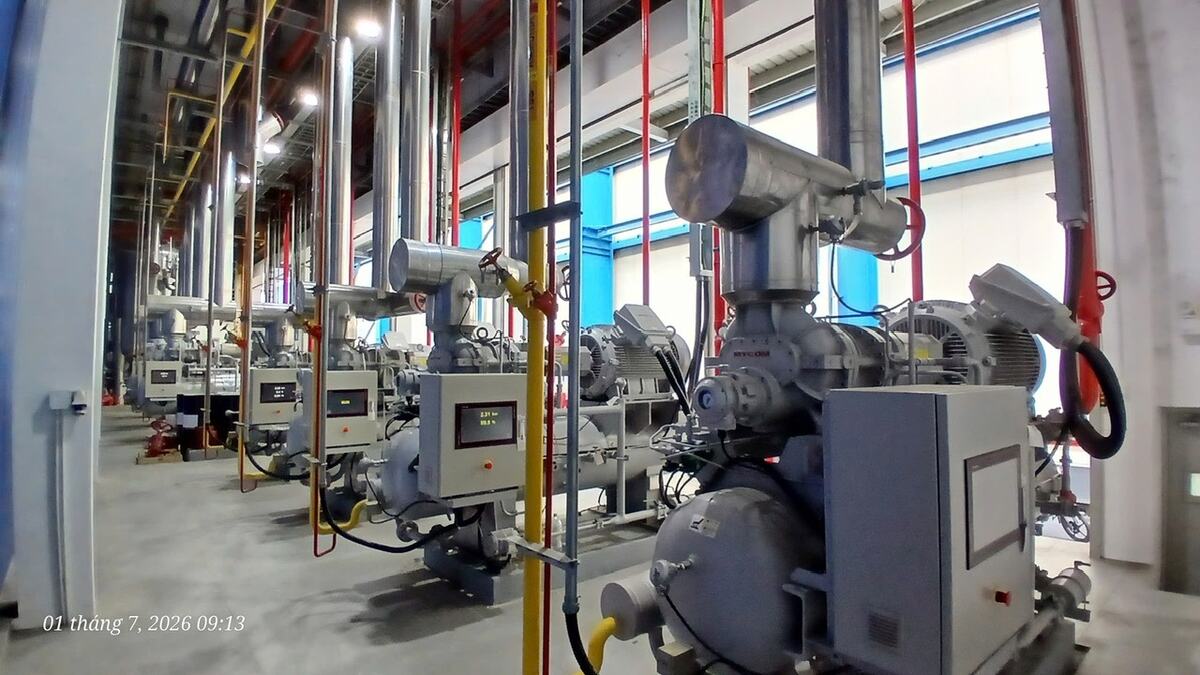
Cụm máy nén trục vít Mycom NH3 kho lạnh NECS Tan Long lắp đặt
Figure 1: Centralized NH3 screw compressor station integrated with VFD inverter control and low-pressure pumped recirculator engineered and installed by Tan Long.

1. Thermodynamic Property Comparison: Ammonia (R717) vs. Halocarbons (R404A/R507)

Basic thermodynamic comparison demonstrating Ammonia's overwhelming thermodynamic superiority in heavy industrial refrigeration:

Thermodynamic Parameter Ammonia (R717) Freon (R404A) Freon (R507A)
Latent Heat of Vaporization at -15°C (r) 1.313 kJ/kg (6x higher than R404A) 206 kJ/kg 209 kJ/kg
Theoretical Coefficient of Performance (COP) 4.76 (Highest in class) 3.95 3.98
Evaporating Heat Transfer Coefficient Very high (2x higher than Freon) Moderate Moderate
Compressor Suction Volume Flow Rate 15% smaller (More compact compressor frame) Large Large
Ozone Depletion Potential (ODP) 0.00 (Zero environmental impact) 0.00 0.00
Global Warming Potential (GWP) 0 (Zero environmental impact) 3,922 (High, subject to phase-down) 3,985 (High, subject to phase-down)
Initial Refrigerant Charge Cost Economical (~35,000 VND/kg) Costly (~250,000 VND/kg) Costly (~280,000 VND/kg)

2. Liquid Overfeed Pump Recirculation Flow Circuitry

In modern cold storage projects and seafood processing facilities, Tan Long Mechanical & Refrigeration always deploys the Liquid Overfeed Pump Recirculation Circuit in place of direct expansion (DX) circuitry:

  • Low-Pressure Recirculator Receiver: Serves simultaneously as a low-temperature pumped liquid receiver (-35°C to -40°C) and vapor separator, ensuring compressors draw 100% dry saturated suction vapor.
  • Hermetic Canned Motor Liquid Pumps: Hermetic liquid pumps circulate liquid NH3 to unit coolers and IQF freezers with a recirculation overfeed ratio of n = 3 to 4 times the actual evaporation rate.
  • Outstanding Technical Advantages: Completely eliminates expansion valve blockages from oil residue; inner tube surfaces remain fully wetted by liquid film, boosting heat transfer rates by 30%, while suction return lines carry low-pressure two-phase vapor safely back to accumulators.
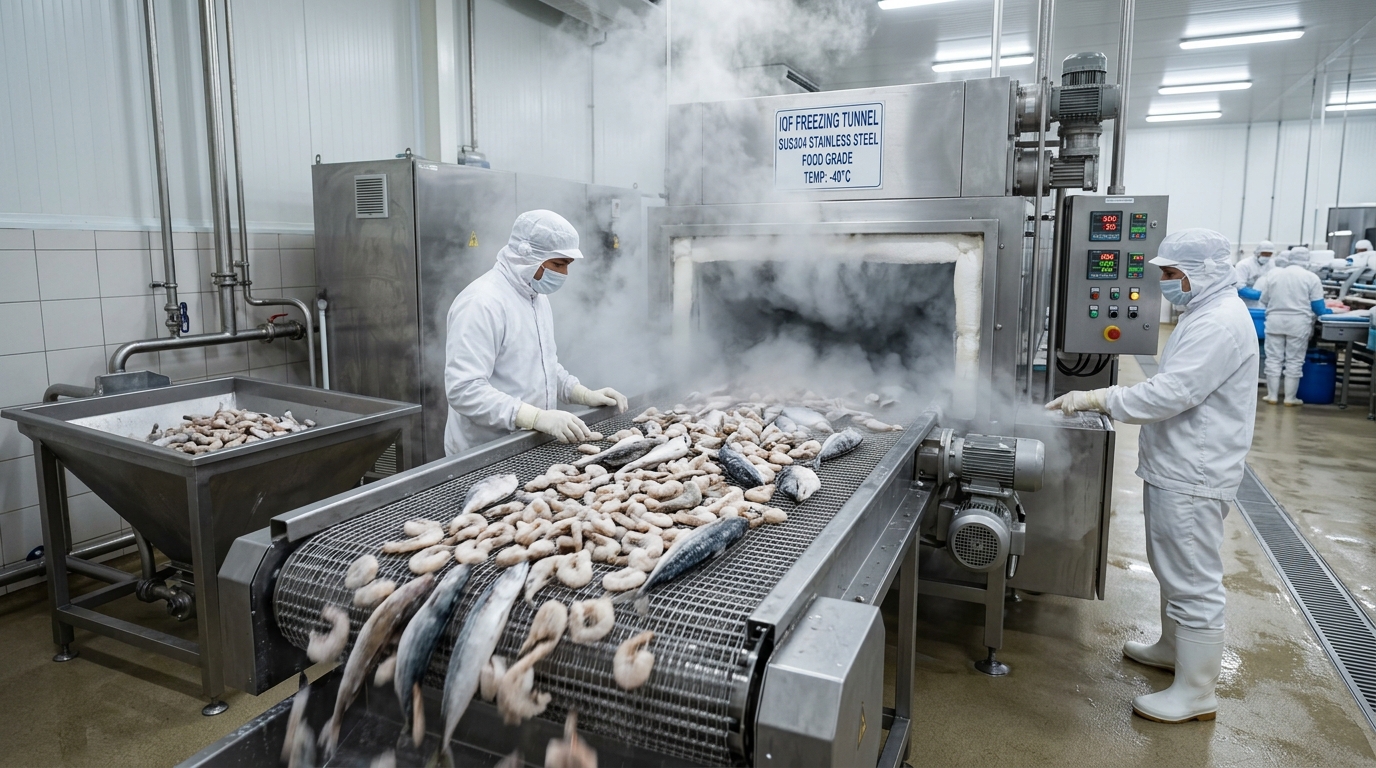
Băng chuyền cấp đông nhanh IQF kết nối trạm lạnh NH3 công nghiệp
Figure 2: Centralized NH3 refrigeration station delivering sub-zero refrigeration duties for Tan Long SUS304 mesh belt IQF freezing lines in export seafood processing.

3. Core Machinery Components of Tan Long NH3 Plants

  • Industrial NH3 Screw Compressor Packages: Directly imported packages from Mycom (Mayekawa Japan) or Kobelco. Integrated with 3-stage 99.99% high-efficiency oil separators, thermosyphon oil coolers, and internal slide valves providing stepless capacity modulation linked with VFD inverters.
  • Tan Long SUS304 Evaporative Condensers: Manufactured at Duc Hoa 1 factory utilizing continuous CNC-bent SUS304 tube coils and low-noise axial fans, depressing condensing temperature to 32°C even during peak summer ambient conditions.
  • ASME-Standard Pressure Vessels: High-pressure receivers, low-pressure pumped accumulators, and two-stage intercoolers are hydrostatically pressure tested and officially certified under statutory pressure vessel code QCVN 21:2015/BLDTBXH.

4. ANSI/IIAR 2 Safety Standards & Gas Detection Architecture

Although Ammonia has a distinct self-alarming odor perceptible at merely 5 ppm, Tan Long prioritizes life safety with an international multi-tier safety architecture:

Tan Long Multi-Tier Life Safety Matrix

  • Optical NH3 Gas Detectors: Calibrated to detect 10 ppm, automatically triggering IP65 explosion-proof emergency exhaust ventilation.
  • Emergency Automated Shut-Off Valves: Instantly isolating individual evaporator zones during line pressure drops.
  • High-Pressure Water Deluge Scrubbers: High-pressure water mist system rapidly scrubbing and dissolving airborne NH3 vapor (Ammonia is infinitely soluble in water).
  • Dedicated Machine Room with Direct Egress: Furnished with positive-pressure SCBA respirators, oxygen canisters, eye-wash stations, and emergency drench showers.

Operational Risks of Substandard Installation

  • Uncertified valves and field welds prone to brittle fracture and dangerous ammonia leaks.
  • Absence of automated sensors and lack of explosion-proof ventilation during leak events.
  • Utilizing copper piping which chemically reacts with Ammonia, provoking catastrophic rupture within months.
  • Ineligible for fire safety approval and fails statutory work safety pressure vessel licensing.

5. Industrial Applications & Use Cases in Seafood Processing Plants

Across leading seafood harvesting hubs in Ca Mau, Bac Lieu, Soc Trang, Can Tho, and Dong Thap, Tan Long NH3 refrigeration plants operate continuously powering:

  • Cold storage complexes (2,000 to 10,000 metric tons) preserving block-frozen shrimp and pangasius fillets.
  • Continuous mesh belt and solid belt IQF freezers (500 to 1,500 kg/h capacity).
  • SUS316L/304 flake ice plants generating sub-cooled dry ice flakes for food processing lines.
6. Frequently Asked Questions (FAQs) About Industrial NH3 Systems

Why do large seafood processors and breweries choose NH3 over Freon?
Ammonia (R717) possesses a massive latent heat of vaporization (~1,370 kJ/kg, nearly 6x higher than Freon R404A/R507) and superior heat transfer rates, delivering 20-30% energy savings for high-capacity systems from 500kW to 20,000kW. Furthermore, NH3 refrigerant charging is exceptionally economical (1/10th of Freon costs) with zero ozone depletion (ODP=0) and zero global warming potential (GWP=0).
Are industrial NH3 refrigeration systems safe regarding toxicity and fire?
Tan Long designs NH3 plants strictly conforming to ANSI/IIAR 2 and TCVN 6104 standards. Facilities feature isolated machinery rooms, optical multi-point NH3 gas detectors interlocked with automatic Emergency Shut-Off Valves, IP65 explosion-proof exhaust fans, and high-pressure water deluge suppression curtains.
What is the expected operational lifespan of an NH3 refrigeration plant?
Tan Long NH3 installations utilize heavy-duty cast Mycom screw compressors (Japan), SCH40/SCH80 seamless steel piping, and SUS304 evaporative condensers with operating lifespans exceeding 30 years—vastly outlasting commercial Freon condensing units rated for 10-12 years.
What is the operating principle of industrial NH3 screw compressors?
NH3 screw compressors operate via meshing male and female helical rotors. Low-pressure suction vapor fills rotor flutes; rotation progressively reduces flute volume, raising vapor pressure and temperature to discharge levels. Units feature internal slide valves modulating capacity steplessly from 10% to 100% paired with VFD inverters.
What is the function of the low-pressure receiver and liquid pumps?
In a pump recirculation liquid overfeed system, sub-cooled liquid NH3 is circulated by hermetic canned pumps through evaporators at 3 to 5 times the evaporation rate. Inner tube surfaces remain continuously wetted by liquid refrigerant, increasing heat transfer coefficients by 30% while preventing liquid carryover into compressors.
Does Ammonia refrigerant corrode copper tubing?
Yes. Ammonia chemically corrodes copper and copper alloys when trace moisture is present. Therefore, in NH3 systems, all piping, stop valves, pressure vessels, and heat exchanger coils must be constructed from seamless carbon steel or SUS304/SUS316 stainless steel.
What is the annual preventative maintenance cost for NH3 systems?
NH3 maintenance costs are modest because rotary screw compressors contain few wearing components. Routine yearly upkeep focuses on lubricant changes, oil filters, coupling alignment, and safety relief valve recertification, typically totaling only 1.5% to 2% of facility capital value.
At what facility capacity should an operator transition from Freon to NH3?
Tan Long engineers advise: For facilities under 200kW cooling duty (< 500 tons holding capacity), Freon packages offer lower upfront capital cost. But for industrial operations exceeding 300kW or holding 1,000+ tons, NH3 is overwhelmingly superior, saving hundreds of millions of VND in energy costs annually.
What is an NH3 / CO2 Cascade industrial refrigeration system?
This is cutting-edge eco-friendly refrigeration: The high-temperature stage utilizes NH3 isolated in an outdoor plant room; the low-temperature stage uses natural CO2 (R744)—completely non-toxic and non-flammable—piped directly into blast freezers and sub-zero storage (-50°C). This marries NH3's high thermodynamic efficiency with CO2's absolute safety.
Can NH3 refrigeration plants be 100% automated without on-site operators?
Fully achievable. Tan Long equips facilities with automated PLC SCADA control systems: Automatic compressor start/stop modulation based on load, automated hot gas defrost, run-time balancing across compressors, and cloud telemetry transmitting alerts to control rooms and engineers' mobile devices.
What refrigeration lubricant does Tan Long utilize for NH3 compressors?
Tan Long uses high-performance synthetic PAO or Alkylbenzene refrigeration oils from OEM brands (Mayekawa Mycom, Bitzer, CPI). Formulated with extreme purity, pour points down to -55°C, and exceptional separation characteristics in multi-stage coalescent oil separators.
What is the emergency response procedure for NH3 leak alarms?
When sensors detect NH3 exceeding 25 ppm, alarms activate, and explosion-proof exhaust fans run at maximum speed to ventilate the area. If levels reach 50 ppm, main solenoid valves isolate liquid supply, compressors trip safely, and high-pressure water deluge sprays activate to scrub and neutralize ammonia vapors.
What is the project turnaround time for a complete NH3 compressor plant?
Skid compressor packages and ASME pressure vessels are manufactured at our Duc Hoa 1 facility in 20 to 30 days. Site piping installation, 24-bar pressure testing, and commissioning require 25 to 45 days depending on evaporator count and IQF freezer capacity.
Are NH3 refrigeration systems subject to periodic statutory inspection?
Yes. All pressure vessels (receivers, accumulators, intercoolers) and ammonia piping are subject to statutory safety inspections and licensed by the Department of Work Safety Inspection under QCVN 21:2015/BLDTBXH. Tan Long manages the entire certification process.
What is Tan Long warranty and maintenance policy for industrial NH3 compressor plants?
Tan Long provides a 24-Month Comprehensive Warranty for compressor packages and plant equipment. Dedicated NH3 service engineers maintain 24/7 readiness, arriving on-site within 2 hours for urgent calls to ensure production continuity.

Consultation & Engineering for Safe, Energy-Efficient NH3 Plants

Over 20 years of experience as EPC contractor for Vietnam's premier ammonia installations. Engineering team ready for complimentary site surveys.

Technical Hotline: 0933 357 058

TECHNICAL EXPERT VERIFICATION

Updated: September 2026 • Standards: TCVN 6739 & QCVN 06:2022
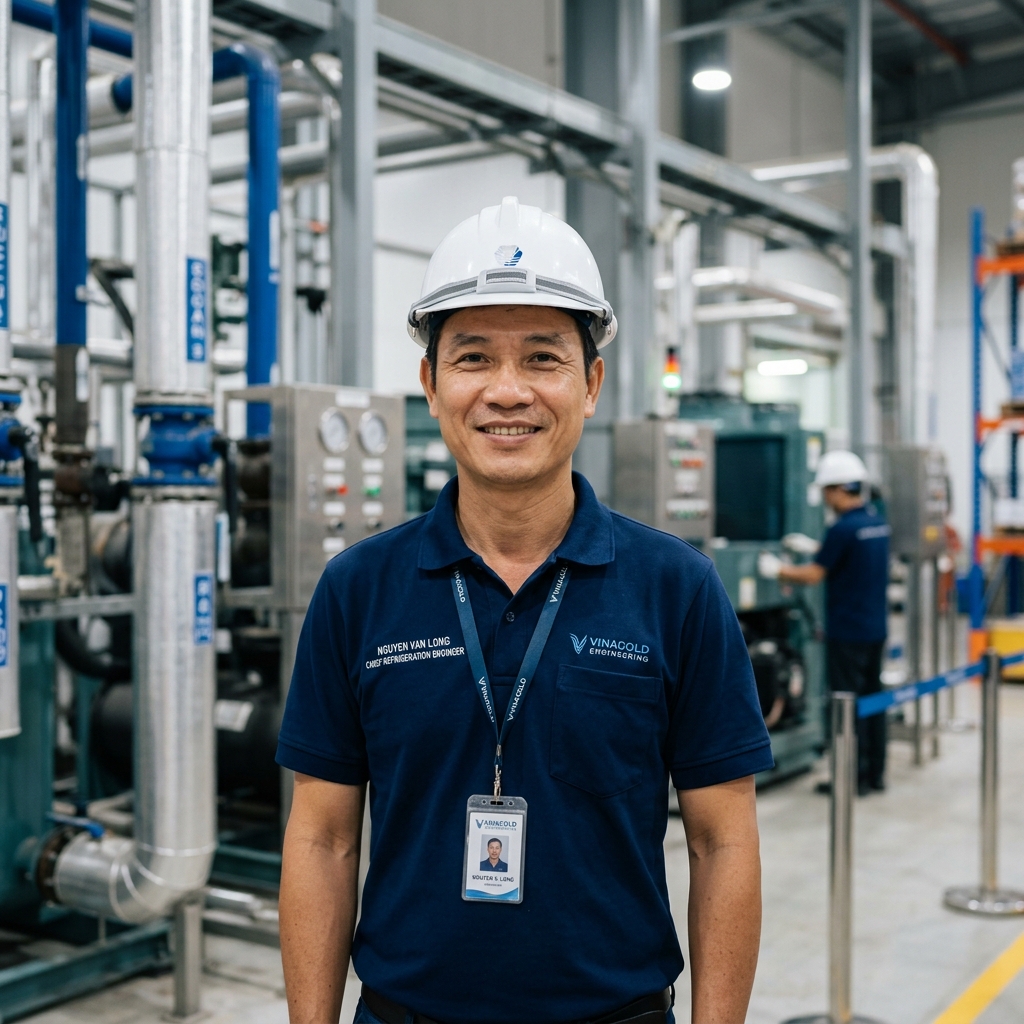
Eng. Nguyen Van Long - EPC Technical Director
EXPERT AUTHOR

Eng. Nguyen Van Long

EPC Technical Director & Head of Refrigeration Solutions, Tan Long

20+ years EPC experience in industrial cold storage systems, IQF quick freezers, and automated ASRS facilities. Thermal Engineering alumnus from HCMC University of Technology, VISRAE Executive Board member.

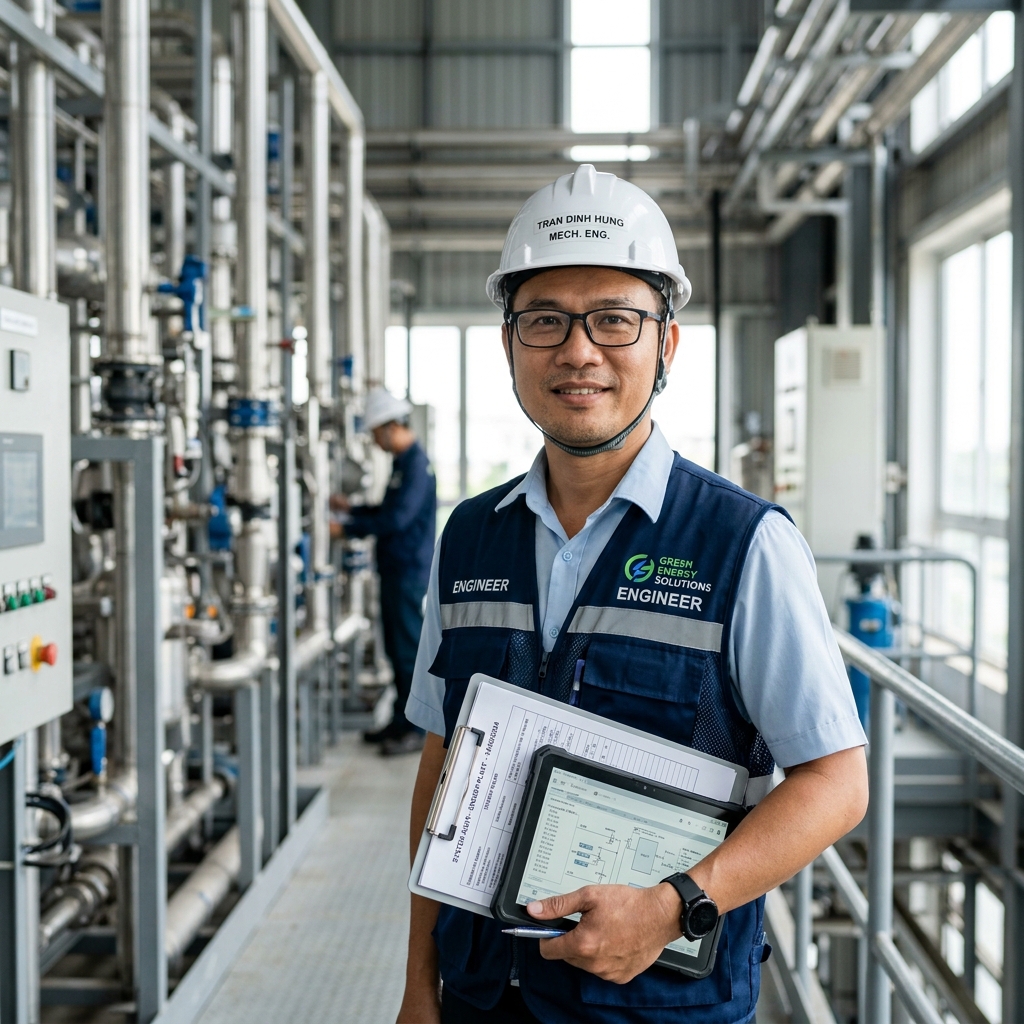
M.Sc. Tran Dinh Hung - Pressure Safety Lead, Tan Long
TECHNICAL VERIFICATION

M.Sc. Tran Dinh Hung

Pressure Vessel Safety Verification & Energy Auditing Lead

15+ years leading NH3 piping pressure safety proofing, COP energy audits, and fire protection certification for PIR/PU panel enclosures under QCVN 06:2022/BXD.