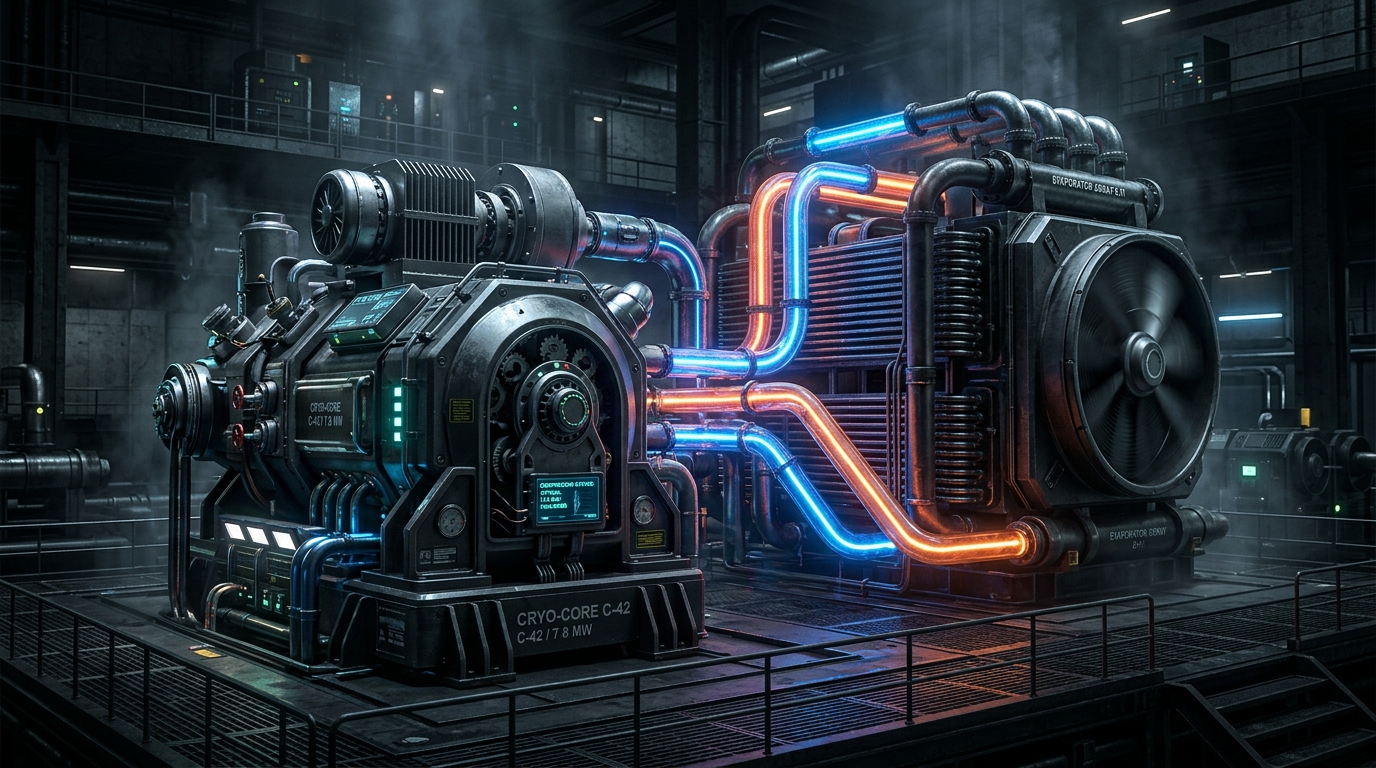
>
TÂN LONG
Flooded Herringbone Evaporator Coil

Herringbone Evaporator System

Tan Long herringbone evaporator coils represent the beating heart of commercial block ice plants and brine chilling tanks. Designed with staggered herringbone tube geometry optimizing hydraulic flow, operating under flooded Ammonia (NH3) or Freon regimes, delivering rapid ice freezing cycles.

Herringbone Evaporator System: Herringbone evaporators consist of flooded serpentine coil banks placed inside block ice brine tanks or falling-film water chillers. The herringbone layout maximizes surface area and liquid turbulence, delivering superior heat absorption even in corrosive saline brine.
In corrosive sodium chloride (NaCl) or calcium chloride (CaCl2) brine immersion tanks used for block ice plants and pelagic fish chilling, Tan Long herringbone evaporator coils utilize heavy-wall seamless steel or SS304 tubes for supreme durability. Tan Long herringbone evaporators are fabricated from heavy-gauge ASTM A106 Grade B seamless steel tubes, hot-dip galvanized or crafted from SUS304 stainless steel, ensuring a 15+ year operational lifespan in aggressive brine tanks.
Dàn Lạnh Xương Cá: Hiệu Suất Truyền Nhiệt Vượt Trội Trong Môi Trường Nước Muối
Hot-dip galvanized seamless steel herringbone evaporator coil assembly at Tan Long fabrication facility

Tan Long Factory Standard Technical Specifications Matrix

Ice Production Capacity 10 Tons, 20 Tons, 50 Tons up to 200 Tons block ice / day
Tube Bank Geometry Staggered herringbone bent tubes, automated high-pressure TIG welding
Tube Material ASTM A106 Gr.B seamless steel hot-dip galvanized >80 microns or SUS304
Surge Drum & Accumulator Integrated surge drum and suction liquid separator header
Refrigerants Flooded Ammonia (NH3) or low-temp Freon
Brine Operating Temp -10°C to -15°C
Freezing Cycle Time 16 to 22 hours per batch (depending on block ice can size)
Brine Agitator Flow Compatible with stainless agitators generating 0.8 - 1.2 m/s forced cross-flow
Get 2026 Equipment Quotation Download Technical Catalog (PDF)

1. Flooded Evaporation Thermodynamics & Brine Flow Dynamics

Tan Long herringbone coils operate under flooded evaporation principles:

• 100% of internal tube surfaces are continuously flooded with liquid refrigerant at -15°C to -18°C.

• Heavy brine agitators circulate salted brine continuously across outer tube surfaces at overall heat transfer coefficients K of 550 to 750 W/m².K.

• Boiling refrigerant vapor bubbles rise rapidly into top suction headers, returning dry gas to compressor racks.

2. ASTM A123 Full Hot-Dip Galvanizing Process

After precision bending and robotic welding on structural jigs, completed coil assemblies undergo pickling acid wash and are immersed in a 450°C molten zinc bath. A durable >80-micron metallurgical zinc alloy layer forms an impervious barrier against electrochemical corrosion.

3. Essential Cold Source for Offshore Fishing Fleets

Commercial block ice is irreplaceable for long-haul offshore fishing vessels. Tan Long herringbone coils produce high-density 50kg and 100kg ice blocks with slow melt rates, preserving tuna, mackerel, and squid across extended sea voyages.

Competitive Advantages & Market Comparison Matrix

Technical comparison between genuine Tan Long refrigeration equipment manufactured at Duc Hoa 1 Industrial Park versus substandard market alternatives:

Tan Long Equipment Advantages

  • ✓ Heavy seamless steel pressure pipe, fully hot-dip galvanized inside and out after bending
  • ✓ Staggered tube geometry reduces hydraulic friction, generating uniform vortex brine circulation
  • ✓ 100% water-tank immersion pneumatic leak testing at 25 bar nitrogen prior to factory release
  • ✓ Proven track record equipping hundreds of commercial ice plants across fishing ports nationwide

Drawbacks of Manual / Used Imported Systems

  • ✗ Artisanal workshops use cheap seamed pipe with flattened bends that choke refrigerant flow
  • ✗ Cheap anti-rust paints flake off within weeks of brine immersion, causing severe rust perforation
  • ✗ Improper hydraulic design causes uneven brine flow, leaving outer ice cans unfrozen
  • ✗ High risk of catastrophic ammonia leaks into brine tanks ruining entire ice harvests

Frequently Asked Questions (FAQs) by Engineers & Investors

Q1: Why do Tan Long herringbone coils freeze block ice faster than locally fabricated coils?

Tan Long calculates precise tube pitch matching agitator cross-flow velocities and integrates an oversized suction accumulator. The coil remains 100% wetted with liquid refrigerant while protecting compressors from liquid slugging.

Q2: What is the optimal brine concentration to prevent evaporator icing?

NaCl brine concentration should be maintained at 21% to 23% (20 to 22 deg Baume). At this concentration, the freezing point of brine is depressed to -18°C to -21°C, optimizing thermal transfer to ice cans without risking slush freeze-up on coil surfaces.
SIZING CALCULATOR & PROVEN EPC PROJECTS UTILIZING THIS EQUIPMENT

Selecting optimized compressor packages and heat exchangers delivers 25% - 30% reduction in operating power consumption:

TECHNICAL EXPERT VERIFICATION

Updated: September 2026 • Standards: TCVN 6739 & QCVN 06:2022
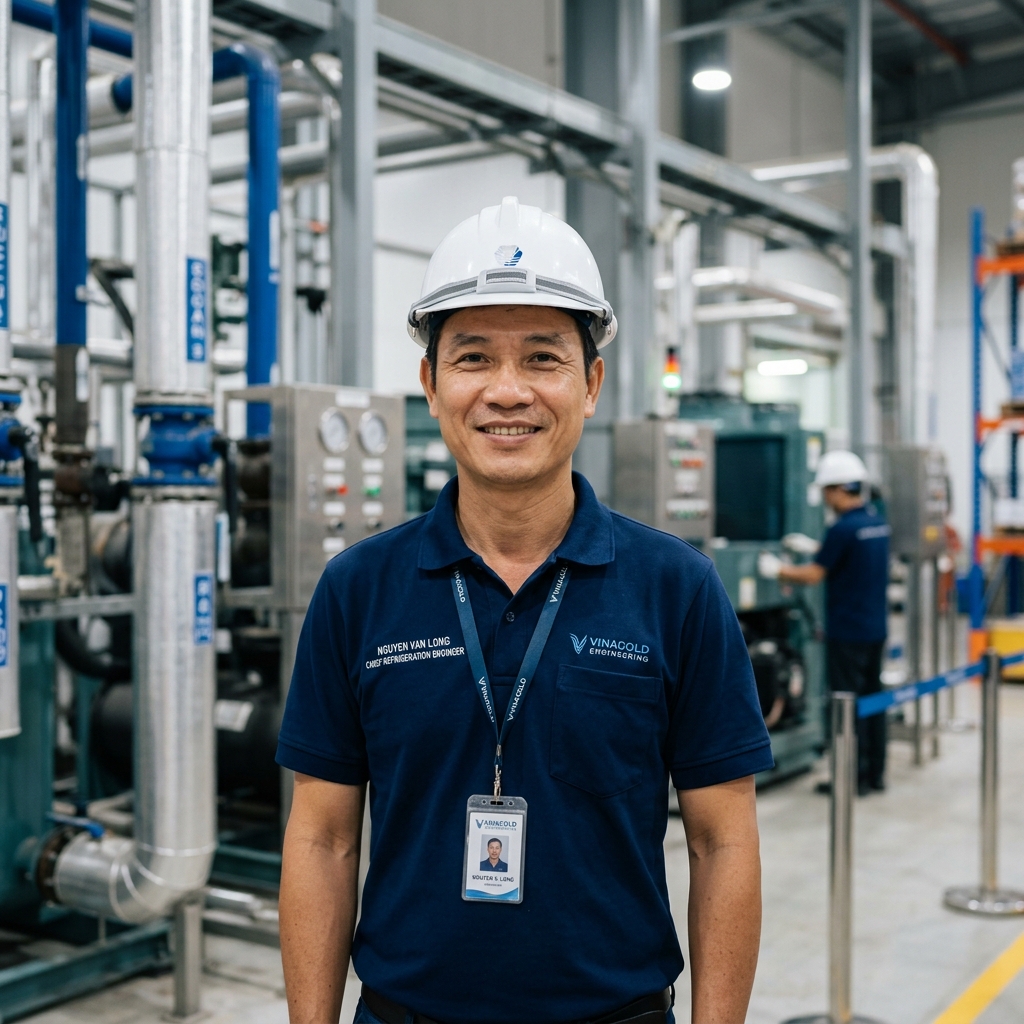
Eng. Nguyen Van Long - EPC Technical Director
EXPERT AUTHOR

Eng. Nguyen Van Long

EPC Technical Director & Head of Refrigeration Solutions, Tan Long

20+ years EPC experience in industrial cold storage systems, IQF quick freezers, and automated ASRS facilities. Thermal Engineering alumnus from HCMC University of Technology, VISRAE Executive Board member.

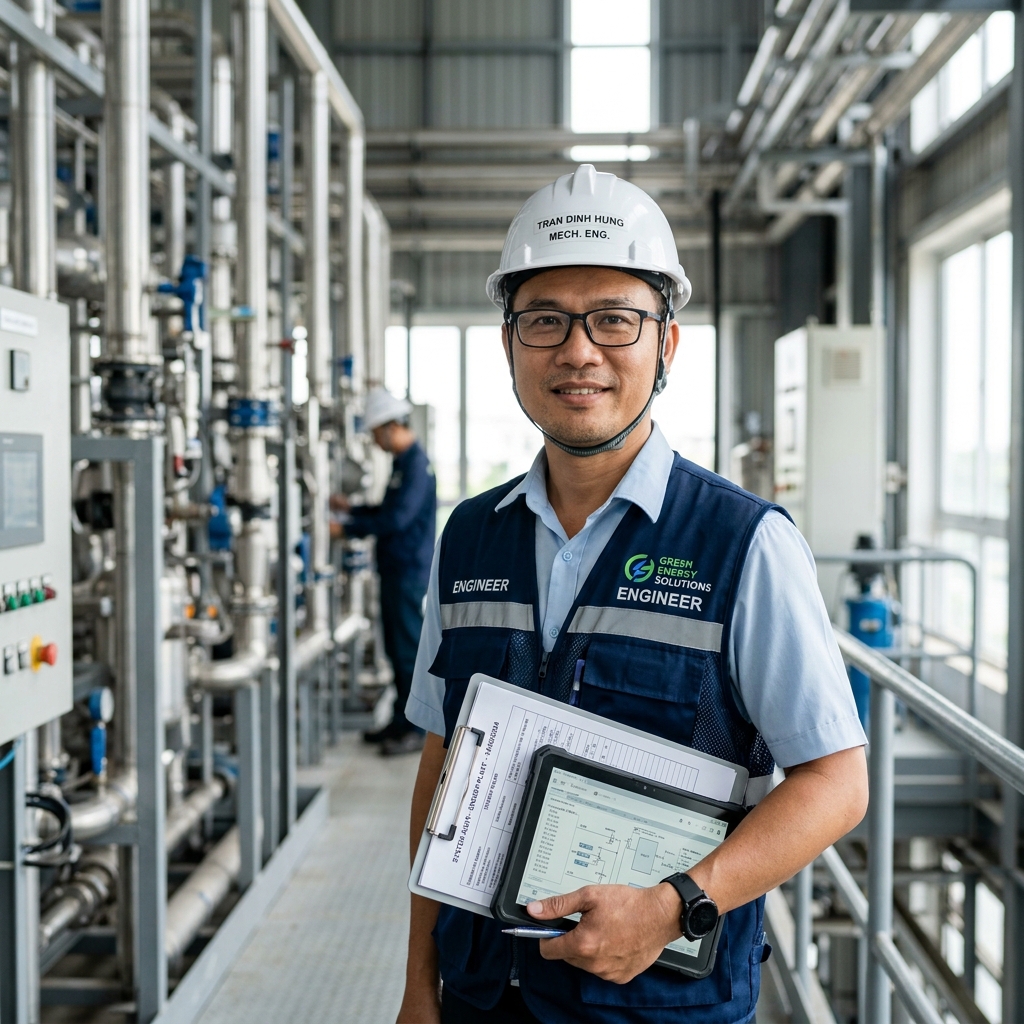
M.Sc. Tran Dinh Hung - Pressure Safety Lead, Tan Long
TECHNICAL VERIFICATION

M.Sc. Tran Dinh Hung

Pressure Vessel Safety Verification & Energy Auditing Lead

15+ years leading NH3 piping pressure safety proofing, COP energy audits, and fire protection certification for PIR/PU panel enclosures under QCVN 06:2022/BXD.