Key Engineering Highlights: Oceanic tuna for sashimi consumption demands extreme deep-freeze preservation at -60°C to 100% inhibit myoglobin oxidation, retaining its natural ruby-red hue and crisp flesh texture. Tan Long is among the few turnkey contractors in Southeast Asia mastering deep cascade compressor systems and ultra-airtight enclosures.
1. Technical Challenges of Ultra-Low Temperature -60°C Storage
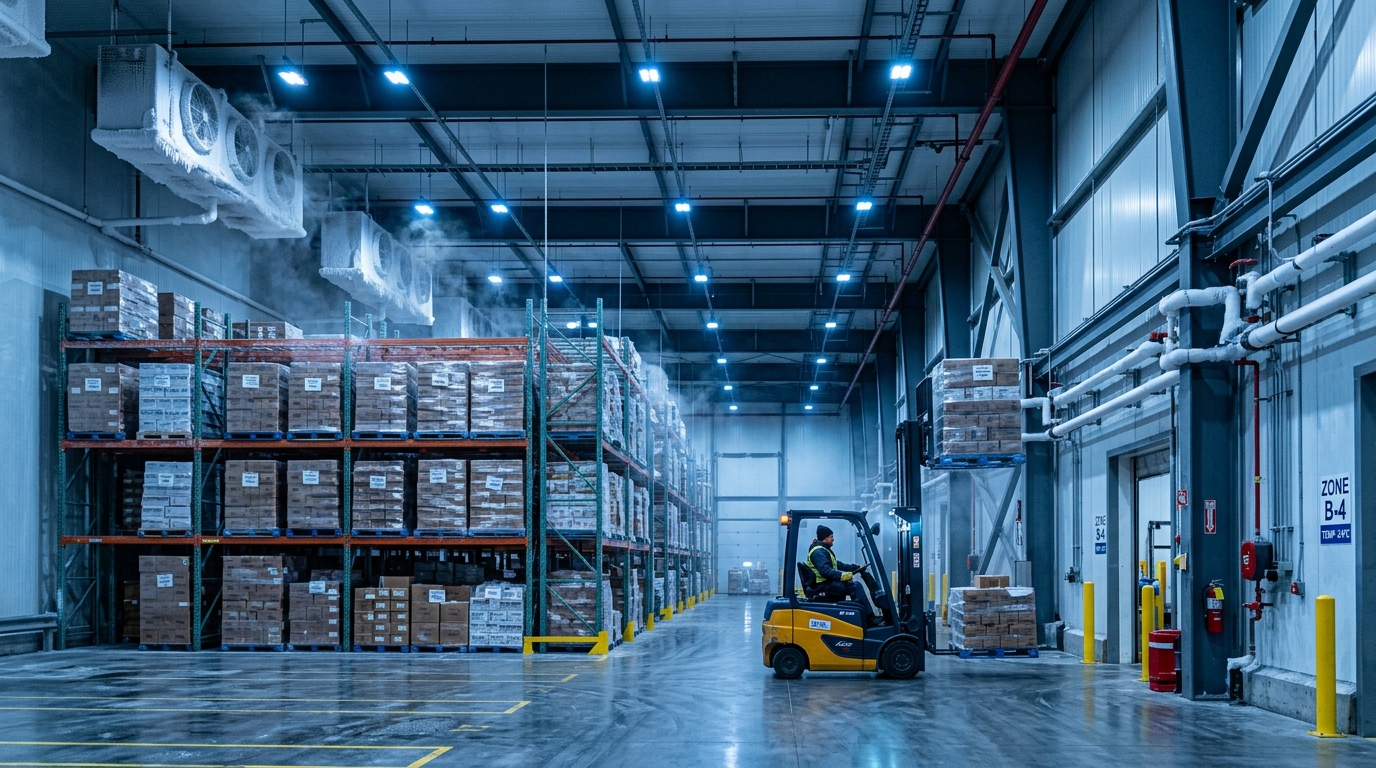
Constructing cold rooms at -60°C presents 10-fold greater engineering challenges compared to conventional freezers (-20°C):
- Pressure Differential & Subfloor Frost Heave Hazard: The temperature difference between the warehouse (-60°C) and the environment outside the Central region (+38°C) is up to nearly 100°C! The extremely high partial pressure of steam creates a strong tendency for water to seep into the ground. If not treated thoroughly, it will freeze the ground layer and cause swelling and cracking of the entire concrete floor.
- Single-Stage Refrigerant Thermodynamic Limits: Conventional refrigerants such as R22, R404A cannot achieve an evaporation temperature of -65°C with acceptable efficiency because the compression ratio is too high, causing the refrigerant oil to freeze and the compressor to overheat and burn out the coils.
- Cryogenic Material Engineering Requirements: Conventional steel at -60°C will become brittle and break like glass (cold embrittlement). All bolts, shelves and pressure pipes must use SUS 304/316 stainless steel or special deoxidized alloy steel.
2. Custom Engineering Solutions Designed & Implemented by Tan Long
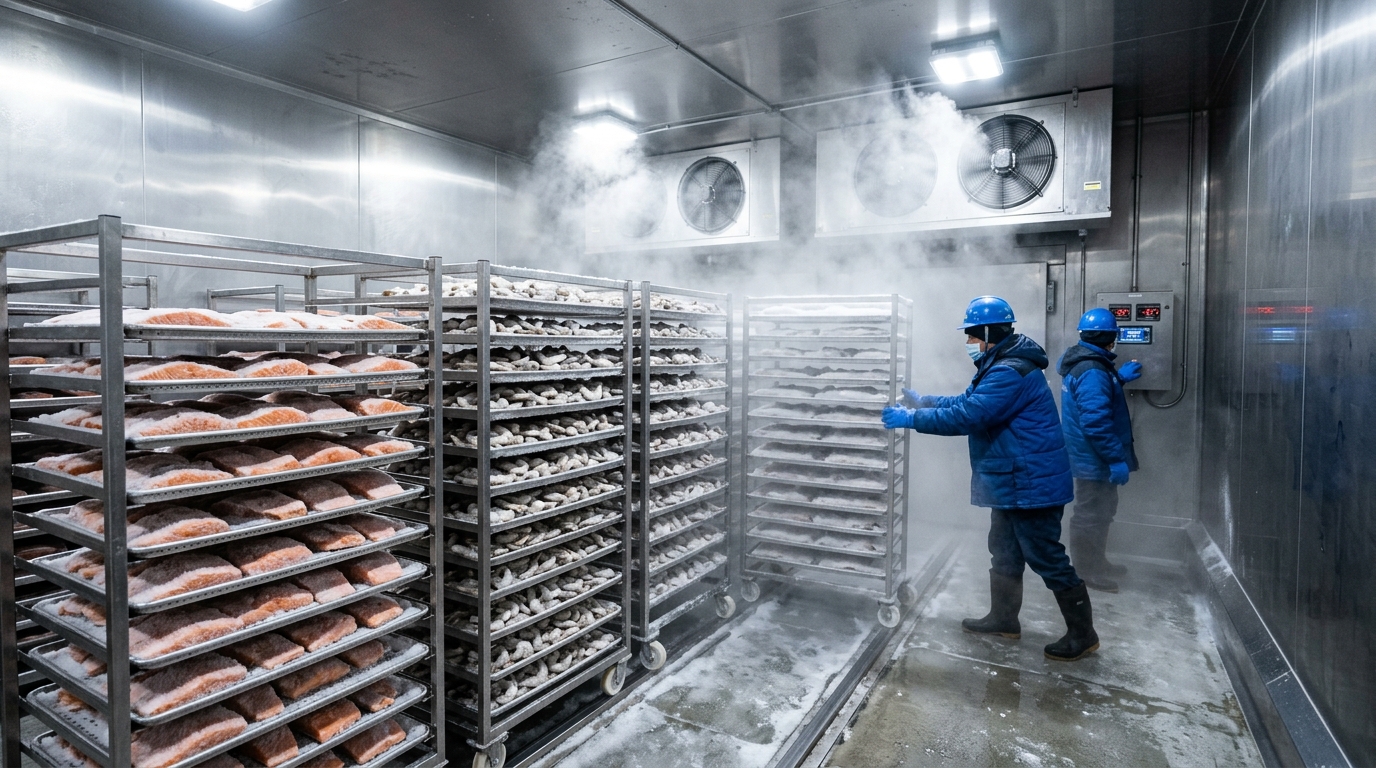
Leveraging 20 years of HVACR engineering expertise, Tan Long senior engineers engineered a comprehensive solution:
- Independent Two-Stage Cascade Refrigeration System (Cascade Refrigeration System):
- High Stage: Use an environmentally friendly Ammonia (NH3) screw compressor, cooled by 304 stainless steel evaporative condenser, lowering the temperature to -25°C.
- Low Stage: Use CO2 (R744) or R23 refrigerant circulating through the intermediate evaporator - condenser (Cascade Condenser), creating a deep evaporation temperature of -68°C at the refrigeration unit in the warehouse.
- 200mm Camlock PU sandwich panel enclosure with double-sided AISI 304 stainless steel: Using 200mm PU panel compression density 45 kg/m³ cast with dual yin and yang clamps. The entire surface is covered with 0.7mm thick 304 stainless steel with ribbed rolling, absolutely resistant to salty vapor in the coastal area of Cam Ranh.
- Multilayer Active Subfloor Heating Network (Subfloor Heating): Install a network of oil heating pipes that circulate excess heat from the compressor combined with backup resistance cables located under the foundation concrete and 250mm thick layer of foam insulation at the bottom of the floor.
- Dedicated deep cold storage door: T-Light insulated sliding door system 150mm thick, equipped with 3-level frame heating resistor with absolute anti-freezing capacity.
3. Technical Specifications Matrix of the Frescol Tuna Facility
| Category | Specifications / Implementation Specifications |
|---|---|
| Total floor area | 3,500 m² (Main warehouse area and quarantine packaging room) |
| Cold storage capacity | 16,800 m³ (Capacity of 2,500 Tons of whole Tuna and loin fish) |
| Operating temperature | -55°C ÷ -60°C (Control error ±0.5°C) |
| Compressor station configuration | Mycom screw compressor assembly (Mayekawa Japan) 2-stage Cascade |
| Installed cooling capacity | 480 kW at evaporation temperature = -65°C |
| Insulated storage shell | 200mm PU panel 304 SUS stainless steel 0.7mm thick with Camlock lock |
| Monitoring system | SCADA IoT Cloud automatically stores temperature charts according to US FDA standards |
4. Commissioning Results & 3-Year Operational Performance Audit
The project completed acceptance and cold load testing successfully, 15 days ahead of schedule. After 3 years of continuous 24/7 operation:
- The warehouse maintains a perfectly stable -60°C temperature, with no dew or freezing at the panel joints.
- Ocean tuna stored for 12 months still retains its bright red color and nutritional content and is purchased by Japanese partners at the highest price on the market.
- The heat recovery solution for floor heating compressors and defrosting helps the factory save more than 450 million VND in electricity costs per year compared to the original estimate.
Technical FAQs on the Project Frescol Tuna
1. Why does sashimi tuna export to Japan strictly require -60°C cryogenic holding temperatures?
In tuna meat, the pigment myoglobin is easily oxidized into gray-brown metmyoglobin if stored at normal temperatures (-18°C to -25°C). Only when reaching subzero temperatures from -55°C to -60°C will the biochemical enzyme reactions be completely frozen, helping fish meat retain its natural bright red color and cell structure from being torn when thawed to make sashimi.
2. How long does turnkey engineering and installation take for a -60°C ultra-low temperature facility like Frescol Tuna?
The total time from design survey, panel fabrication at Duc Hoa factory, import of Cascade compressor assembly and complete installation and handover at Khanh Hoa construction site is about 90 to 120 days.